PART 5
Three months after my husband confessed to forging my signature, the judge looked at him, then at me, and asked one quiet question that changed the rest of our lives: “What does justice look like to you?”
I had imagined that moment a hundred different ways.
In some versions, I demanded everything.
In others, I cried.
But when it finally came, I realized I wasn’t standing in that courtroom because I wanted revenge.
I was standing there because my children deserved a mother who would never again apologize for someone else’s choices.
Three months later
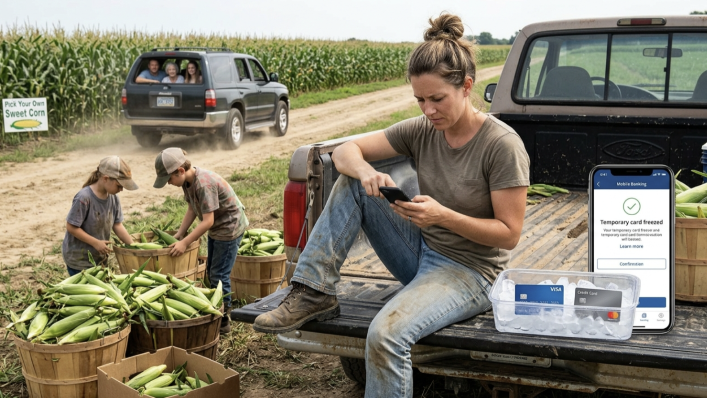
Autumn had painted the cornfields gold.
The sweet corn harvest was over, and my parents were preparing the land for winter wheat. Life had settled into a new rhythm. Lily had started third grade. Noah proudly carried the backpack I’d bought him the week after leaving Ethan—a simple blue one with little astronauts on it.
Every morning, Dad drove them to the school bus stop in his old pickup.
Every afternoon, they came home smelling like crayons and sunshine.
The only thing still unsettled was my marriage.
Ethan had kept his promise.
He sold his fishing boat.
He cashed out his motorcycle.
He emptied the vacation savings account.
Every dollar went toward reducing the fraudulent debt.
His mother, Carol, had done something I never expected.
She sold nearly all of her jewelry—the same jewelry I had seen on those credit-card statements—and mailed the proceeds directly to the bank with a handwritten note:
I refuse to wear anything that cost my grandchildren their security.
I cried when I read it.
Not because the money fixed everything.
Because someone had finally chosen integrity over pride.
Vanessa came to the farm the following weekend.
She didn’t bring excuses.
She brought work gloves.
“I owe your parents more than money,” she said.
Dad handed her a shovel.
“Good,” he replied. “The fence line needs repairing.”
For six hours she worked beside us without complaining.
When she left, she hugged Lily and Noah before quietly telling me, “I’m sorry I let my brother convince me this was normal.”
I believed her.
The courtroom
The hearing wasn’t dramatic.
No shouting.
No surprise witnesses.
Just facts.
The bank’s investigation confirmed that the signatures on the loans had been forged. The former employee who processed the applications admitted she had skipped identity verification because Ethan claimed I was “outside with the kids.”
She lost her banking license.
The fraudulent loans were transferred entirely into Ethan’s legal responsibility.
My credit record was restored.
When the judge finished reviewing the case, he looked directly at Ethan.
“You didn’t steal from a bank first,” he said calmly. “You stole from your wife’s trust.”
Ethan lowered his head.
Then the judge turned to me.
“What outcome are you requesting regarding the marriage?”
Everyone waited.
Even the attorneys stopped writing.
I looked across the room.
Ethan wasn’t the man who laughed while leaving me to harvest corn anymore.
He looked tired.
Older.
Ashamed.
But remorse, I had learned, is not the same thing as repairing a broken foundation.
“I’m requesting an uncontested divorce,” I answered softly.
The words hurt.
Even though I knew they were right.
Ethan closed his eyes.
Then he nodded.
“I agree.”
No argument.
No manipulation.
Just acceptance.
The goodbye
A week later, Ethan came to the farm one last time.
Not to ask me back.
To tell the children.
We sat beneath the enormous oak tree beside the farmhouse while Lily swung her legs from the porch swing.
Ethan took a deep breath.
“Mom and Dad aren’t going to live in the same house anymore.”
Noah frowned.
“Did we do something bad?”
Both of us answered at the same time.
“No.”
I pulled them into my arms.
“This is a grown-up problem. You are loved exactly the same.”
Lily was quiet for a long time.
Then she asked the question children always seem brave enough to ask.
“Can we still love both of you?”
Ethan’s eyes filled with tears.
“Yes,” he whispered.
“Please do.”
That afternoon, he walked with the kids through the harvested cornfield, now nothing but neat rows of golden stalks. They laughed while throwing dried corn husks into the air.
Watching them, I remembered the day he had driven away for vacation.
I had thought I was losing everything.
I hadn’t realized I was walking toward freedom.
One year later
The following September, the farm held its first community Sweet Corn Festival.
It was Mom’s idea.
Instead of hiring workers, neighbors volunteered. Children raced through hay-bale mazes. Local musicians played country songs from the flatbed of an old trailer.
Lily managed the lemonade stand.
Noah insisted on greeting every customer with, “Welcome to Grandpa’s farm!”
Dad laughed so hard he nearly spilled kettle corn.
Near noon, I noticed a familiar truck pulling into the gravel lot.
Ethan.
He stepped out carrying two pumpkins.
He had become punctual for every visitation, paid every child-support payment early, and continued paying off the court-ordered debt without missing a month.
We weren’t husband and wife anymore.
But we had slowly learned how to become something our children still needed.
Respectful parents.
He handed the pumpkins to Lily and Noah.
“These are for the decorating contest.”
The kids squealed and ran toward the craft tables.
For a moment, Ethan and I stood watching them.
“They’re happy,” he said.
“They are.”
“I’m sorry,” he whispered.
I looked at the festival around us—my parents dancing together near the stage, Mom hugging neighbors, children running through the fields that had once witnessed the worst day of my marriage.
Then I smiled gently.
“I know.”
It wasn’t forgiveness that erased the past.
It was peace that stopped letting the past control the future.
Epilogue
That evening, after the last visitors left, Dad handed me a small wooden box.
“I’ve been saving this.”
Inside was the deed to ten acres along the eastern edge of the farm.
I stared at him.
“Dad…”
He smiled.
“You earned more than corn this harvest.”
Tears blurred my vision.
The same fields where I had once stood feeling abandoned had become the place where my children found stability, my parents found new joy, and I found myself again.
Sometimes people think the greatest harvest is measured in money.
They’re wrong.
The greatest harvest is the family that remains standing after the storm.