
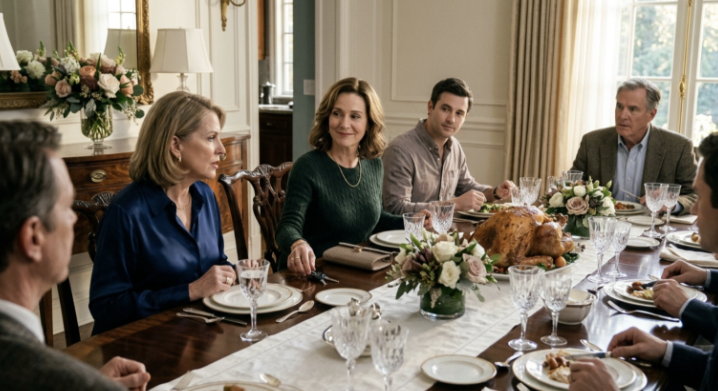
“You Weren’t Invited,” My Daughter-in-Law’s Parents Said
PART 4
The first line of Ruth’s letter made my hands stop shaking.
Lucas, if you are reading this, then something has gone wrong.
I read it again.
Then I continued.
I hope I am wrong. I hope you never need this letter. But if you do, please remember one thing before you make any decision: do not let money decide what family means to you.
I swallowed hard.
That was Ruth.
Even in a letter written years before her death, she was still trying to keep me from making decisions with anger.
I continued reading.
You remember the summer Richard Merritt first approached us about investing in his company. You probably remember me telling you that something about him made me uncomfortable.
I stopped.
I remembered.
Twenty-one years earlier, Richard had been a younger man with a small office, a big presentation, and enormous confidence.
He had convinced several local investors that his company would become one of the largest private development firms in the region.
I had invested.
Not because I trusted Richard.
Because I trusted the numbers.
At the time, Merritt was worth very little.
Ruth and I had invested money we had saved over decades.
It was supposed to be a retirement investment.
But Ruth had always been more careful than I was.
She had asked questions.
Lots of them.
And Richard had hated answering them.
I continued reading.
There was something I discovered after we invested.
My heart began beating faster.
Richard had secretly used company funds to cover a personal debt belonging to his father.
I stared at the page.
Richard’s father.
The same name written on the envelope.
I confronted him. He denied it. Then he apologized and returned the money. At the time, I thought it was over.
I turned the page.
There was another paragraph.
It wasn’t.
My breathing became shallow.
I discovered that Richard’s father had been using company accounts to move money into another business owned by his family. Richard knew about it. He was young then, and I believe he was afraid of losing everything.
I sat back.
Suddenly, the documents Harold had shown me made sense.
The same pattern.
Different generation.
Same family.
Ruth continued.
I asked Richard why he didn’t report it. He told me family had to protect family.
I whispered the words aloud.
“Family had to protect family.”
Then I saw the next sentence.
That was when I realized Richard didn’t mean family. He meant people who benefited him.
I closed my eyes.
Ruth had understood him decades before I did.
But the next paragraph was even more shocking.
Lucas, I kept copies of everything. Not because I wanted to destroy Richard. I kept them because I knew one day someone might need proof.
I looked toward the filing cabinet.
The same cabinet I had opened that morning.
I stood immediately.
I searched through the folders.
Tax returns.
Investment statements.
Old bank records.
Insurance policies.
Nothing.
Then I remembered the old wooden box Ruth used to keep important papers.
It had been stored behind the books on the lowest shelf.
I pulled it out.
Inside were dozens of envelopes.
And one small black flash drive.
My hands went cold.
There was a handwritten label.
Merritt — Original Records
I stared at it.
Ruth had preserved everything.
I called Harold.
He answered immediately.
“Lucas?”
“I found something.”
“What?”
“Original records from twenty years ago.”
There was silence.
“Are you sure?”
“I’m looking at them.”
“Do not open the drive on a normal computer.”
“Why?”
“Because if there is sensitive financial information on it, we need to preserve the chain of custody.”
I almost smiled.
Even now, Harold was thinking like an attorney.
“Come here tomorrow morning,” he said.
“No.”
“No?”
“Come tonight.”
He hesitated.
“Lucas, it’s nearly midnight.”
“I don’t care.”
An hour later, Harold was sitting at my kitchen table.
We opened the documents carefully.
The records showed transfers between Merritt Development, Richard’s father’s company, and another business controlled by the family.
The amounts were enormous for the time.
But there was something else.
A signed agreement.
Ruth had discovered that her original investment had been diluted through a series of transactions designed to reduce the ownership percentage of small shareholders.
Except mine had never been legally diluted.
Because Ruth had challenged it.
And she had won.
I looked at Harold.
“So my shares were protected?”
“Yes.”
“And Richard knows?”
“Apparently not.”
“Then why does he think he can get them?”
Harold turned another page.
His face changed.
“Because someone has been telling him something different.”
“Who?”
He pointed to a signature.
I stared at it.
Daniel.
My son had signed a document acknowledging a future transfer of my shares.
But the signature wasn’t alone.
There was another signature beside it.
Richard.
And beneath both names was a date from six months earlier.
The same time Daniel had admitted Richard first approached him.
I felt something inside me collapse.
“Daniel signed this?”
“Yes.”
“But he never owned my shares.”
“Correct.”
“Then this document is worthless.”
“Legally, yes.”
“But…”
Harold looked at me.
“This document could still be damaging if Richard believed he had Daniel’s cooperation.”
I leaned back.
Suddenly everything became clear.
Richard had planned to convince Daniel to pressure me.
He wanted my shares because they were worth far more than anyone in the family realized.
And if he controlled them, he could regain control of Merritt without exposing the company’s financial problems.
I looked at the clock.
“We need to move.”
Harold nodded.
“Tomorrow?”
“No.”
I picked up my phone.
“Tonight.”
The next morning, Merritt’s board received a formal notice.
An independent review had been requested.
All related-party transactions were to be examined.
No assets could be transferred without board approval.
No shareholder agreements could be altered.
And most importantly, every transaction involving Richard’s family members would be reviewed.
By ten in the morning, Richard knew.
By eleven, he called me.
I answered.
“Lucas.”
His voice sounded different.
Not confident.
Not arrogant.
Controlled.
Barely.
“Yes?”
“We need to talk.”
“We are talking.”
“Privately.”
“No.”
He paused.
“I think there has been a misunderstanding.”
“No, Richard.”
I looked out the window.
“I think there has been a very long understanding.”
Silence.
“You’ve been investigating Merritt.”
“Yes.”
“You have no idea what you’re dealing with.”
“I have twenty years of documents.”
His breathing changed.
“Where did you get them?”
“From Ruth.”
Nothing.
For several seconds, neither of us spoke.
Then Richard whispered:
“She kept those?”
“Yes.”
“You don’t understand.”
“Then explain it.”
“I was trying to protect my family.”
I almost laughed.
“That’s what you told Ruth.”
“You knew?”
“She wrote everything down.”
His voice became angry.
“You have no right to interfere with my company.”
“I am a shareholder.”
“A minority shareholder.”
I smiled.
“You might want to check the records.”
Silence.
Then he said:
“Lucas, please.”
That word surprised me.
Please.
The same man who had once barely noticed me at his daughter’s wedding rehearsal was asking me to listen.
“What’s going to happen?” he asked.
“That depends.”
“On what?”
“Whether the truth comes out voluntarily or through an investigation.”
He didn’t answer.
I continued.
“You have until five o’clock.”
“For what?”
“To provide every financial record requested by the board.”
“And if I don’t?”
“Then the board will obtain them another way.”
He hung up.
At 4:43 p.m., the documents arrived.
At 4:51, the board suspended Richard from financial decision-making.
At 5:17, the independent auditors entered Merritt’s offices.
And at 6:02, Richard’s attorney called Harold.
By the end of the week, Richard’s carefully constructed empire was beginning to unravel.
The acquisition of his brother’s company was canceled.
Several transactions were referred for further legal review.
The board appointed an interim executive team.
And Richard resigned from his position.
But the most painful part came later.
Daniel came to my house.
He didn’t bring excuses.
He didn’t bring flowers.
He didn’t bring a gift.
He simply stood on my porch.
“Dad.”
I opened the door.
“Come in.”
He stepped inside.
We sat in the same living room where he had confessed everything.
He looked older.
Not physically.
Emotionally.
“I want to apologize.”
I said nothing.
“I know I’ve already said it.”
“Yes.”
“But I didn’t understand what I was apologizing for.”
I looked at him.
“What do you understand now?”
“That I wasn’t embarrassed by you.”
I waited.
“I was embarrassed by myself.”
That answer surprised me.
Daniel continued.
“I spent years trying to become someone Richard would respect.”
He looked at Ruth’s photograph.
“I thought money would make me important.”
His voice cracked.
“But when everything started falling apart, I realized the only person who had never asked me to prove anything was you.”
I remained silent.
“I betrayed you.”
“Yes.”
“I lied.”
“Yes.”
“I let them insult you.”
“Yes.”
“And I almost traded my father’s trust for three million dollars.”
He lowered his head.
“I know.”
The room was quiet.
Finally, I said:
“Do you know what hurt the most?”
He looked up.
“It wasn’t the money.”
His eyes filled with tears.
“It wasn’t Richard.”
“It wasn’t Victoria.”
I pointed toward the photograph.
“It was that your mother wasn’t here to see what happened.”
Daniel looked at the photograph.
“I miss her.”
“So do I.”
We sat there quietly.
Then Daniel asked:
“Can you forgive me?”
I looked at him for a long time.
“I already have.”
His face crumpled.
“But I need you to understand something.”
He nodded.
“Trust isn’t something you demand after an apology.”
“I know.”
“You rebuild it.”
“How?”
“By what you do when nobody is watching.”
Daniel nodded slowly.
“I’ll do that.”
He stood.
Before he reached the door, I called his name.
“Daniel.”
He turned.
“You don’t need Richard’s approval.”
He looked at me.
“You don’t need mine either.”
His eyes filled again.
“You need to become someone you respect when you look in the mirror.”
He nodded.
“I will.”
Then he left.
Months passed.
The Merritt investigation continued.
Richard’s name disappeared from the company’s offices.
Victoria moved out of the large house she had once treated like a symbol of superiority.
Emily and Daniel eventually separated.
Not because of the money.
Because Daniel finally understood that a marriage built around appearances couldn’t survive when the appearances disappeared.
I never celebrated Richard’s downfall.
That wasn’t what Ruth would have wanted.
Instead, I watched quietly as the truth worked its way through the system.
Some people faced consequences.
Some cooperated.
Some admitted what they had done.
And some never did.
But I didn’t need revenge.
I needed peace.
One spring morning, Daniel came to my house carrying something.
The blue casserole dish.
I stared at it.
“You kept it?”
“I found it at Emily’s parents’ house.”
I took it from him.
The ceramic was scratched.
There was a tiny chip near the handle.
But it was still the same dish Ruth had used for years.
Daniel smiled.
“I thought you should have it back.”
I ran my fingers over the edge.
“Thank you.”
He looked toward the kitchen.
“Can I make the sweet potatoes?”
I laughed.
“You don’t even know the recipe.”
He smiled.
“Then teach me.”
So I did.
We stood in the kitchen together.
Brown sugar.
Cinnamon.
Pecans.
Sweet potatoes.
For the first time in years, the kitchen didn’t feel empty.
Daniel asked questions.
I corrected him.
He complained that there was too much cinnamon.
I told him he was wrong.
He laughed.
And for a few minutes, we were simply father and son.
Nothing else.
No company.
No shares.
No inheritance.
No wealthy in-laws.
Just family.
Later that afternoon, Daniel and I sat on the porch.
He looked toward the street.
“Dad?”
“Yes?”
“Do you ever regret investing in Merritt?”
I thought about it.
Then I shook my head.
“No.”
“Even after everything?”
“Even after everything.”
“Why?”
I looked at Ruth’s photograph through the window.
“Because your mother taught me something.”
“What?”
“Money can reveal who people are.”
I paused.
“But it doesn’t create who they are.”
Daniel looked down.
I continued.
“The people who loved you before you had anything are the people you should remember when you have everything.”
He nodded.
After a moment, he asked:
“Do you think Mom would be proud of us?”
I smiled.
“She’d say we still have work to do.”
Daniel laughed.
“That sounds like her.”
“It does.”
That evening, I placed Ruth’s letter back inside the wooden box.
But before closing the lid, I added one more thing.
A photograph.
It was taken that afternoon.
Daniel and me standing in the kitchen beside the blue casserole dish.
For years, I had thought Ruth’s final gift to me was the money she had helped protect.
I was wrong.
Her greatest gift was the reminder that money should never decide who deserves a seat at your table.
That Thanksgiving, I had walked out of a house because someone told me I wasn’t invited.
I thought I had lost my family that day.
But I eventually realized something.
I hadn’t lost my family.
I had discovered which parts of it were real.
And sometimes, the hardest door to walk away from is the one that leads you back to yourself.
The following Thanksgiving, Daniel arrived at my house early.
He was carrying groceries.
He walked into the kitchen and placed them on the counter.
“Dad?”
“Yes?”
“I brought everything.”
I looked at the bags.
“Everything?”
He nodded.
“Sweet potatoes. Brown sugar. Cinnamon. Pecans.”
I smiled.
“And the turkey?”
He froze.
“I forgot the turkey.”
I burst out laughing.
He laughed too.
Then he grabbed his keys.
“I’ll go get one.”
I shook my head.
“Wait.”
I opened the refrigerator.
“There are two.”
He stared at me.
“Two?”
“One for us.”
I paused.
“And one for anyone who might show up without an invitation.”
Daniel smiled.
“That sounds like Mom.”
I looked at the empty chair at the end of the table.
“Yes,” I said softly.
“It does.”
And that year, nobody asked whether they belonged.
Nobody checked their bank account.
Nobody cared what kind of car they drove.
Nobody needed to impress anyone.
We simply opened the door.
Because Ruth had been right all along.
A family isn’t defined by who owns the biggest house.
Or who sits at the head of the table.
Or who has the most money.
A family is defined by who makes room when someone else has nowhere to sit.
And sometimes, the greatest victory isn’t making the people who rejected you regret what they did.
It’s becoming strong enough that you no longer need their invitation.
I had walked away from that Thanksgiving table with nothing but my keys and an old casserole dish.
I came home believing I had been rejected.
In the end, I discovered something much more valuable.
I had never been the one who didn’t belong.
I had simply been sitting at the wrong table.