
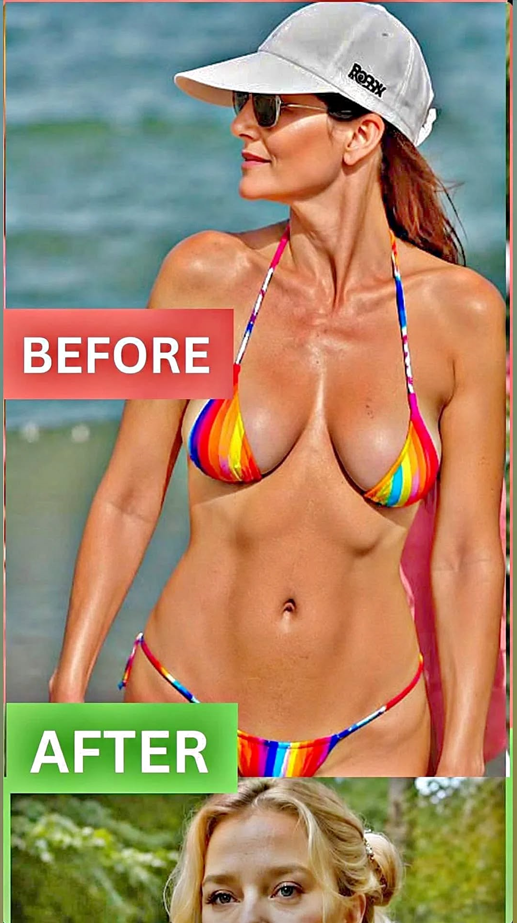
At first glance, the image appears to present a dramatic “before and after” transformation. The top half shows a woman at the beach wearing a colorful bikini, sunglasses, and a white cap labeled “BEFORE.” The bottom section, labeled “AFTER,” begins to reveal what appears to be another image of a woman. However, because the lower image is cut off, it’s impossible to determine what the full comparison is intended to show or whether both images even depict the same person.
This highlights an important point about before-and-after photos: they often tell only part of a story. Without context, they can be misleading and create unrealistic expectations about health, fitness, beauty, or cosmetic results.
The upper image portrays a woman with a lean, athletic physique enjoying a sunny day at the beach. She appears healthy, confident, and relaxed. Her posture, natural lighting, tan skin, and beach setting all contribute to an image that many people associate with an active lifestyle. However, a single photograph cannot reveal someone’s overall health, physical fitness, diet, or medical condition.
Many factors influence how a person looks in a photo. Professional lighting, camera angles, posture, hydration levels, and even the time of day can dramatically affect appearance. Simply standing differently or adjusting body posture can make muscles appear more defined or change how the waist and torso look. Because of this, comparing two isolated images without additional information can easily lead viewers to incorrect conclusions.
Before-and-after images are commonly used in advertising for fitness programs, skincare products, diets, supplements, cosmetic procedures, and weight-loss services. While some transformations are genuine, others rely heavily on carefully controlled photography rather than actual long-term changes. This is why consumers should approach such images with a critical eye and look for evidence rather than relying solely on visual comparisons.
Real physical transformation usually requires consistency over time. Whether the goal is improving cardiovascular health, building muscle, reducing body fat, or increasing flexibility, meaningful progress generally comes from regular exercise, balanced nutrition, sufficient sleep, and sustainable habits rather than quick fixes. Results also vary significantly between individuals due to genetics, age, hormones, lifestyle, and medical history.
Another important consideration is body confidence. People often compare themselves to carefully selected images online without realizing that many photos have been professionally edited or taken under ideal conditions. Healthy living should focus on feeling stronger, having more energy, and improving overall well-being rather than trying to perfectly match someone else’s appearance.
The image also reminds us that confidence is not necessarily tied to body shape. The woman in the upper photo appears relaxed and comfortable in her environment, which can be just as important as physical appearance. Confidence often develops from self-care, maintaining healthy habits, and accepting that every person’s body is unique.
If this image is intended to represent a cosmetic procedure or beauty treatment, viewers should seek reliable information before making decisions. Medical or cosmetic interventions should always be discussed with qualified professionals who can explain realistic outcomes, potential risks, recovery time, and whether a procedure is appropriate for an individual’s circumstances.
Similarly, if the comparison relates to fitness or weight management, it’s important to remember that healthy progress is usually gradual. Experts generally recommend balanced nutrition, regular physical activity, and realistic goals instead of extreme diets or unverified products promising rapid transformations.
One limitation of this particular image is that the “after” section is incomplete. Since the lower photograph is cropped, it isn’t possible to evaluate what change the creator intended to demonstrate. It could represent aging, a hairstyle change, cosmetic treatment, weight change, or something entirely different. Without the complete image or accompanying explanation, any specific interpretation would simply be speculation.
Ultimately, photographs can be powerful visual tools, but they rarely tell the whole story. Health, beauty, and personal well-being are far more complex than a single image can capture. When viewing before-and-after comparisons, it’s wise to consider the source, look for supporting information, and remember that genuine, lasting improvements typically come from informed decisions and sustainable habits rather than dramatic marketing claims.
Rather than focusing only on appearance, a more balanced perspective values physical health, mental well-being, confidence, and realistic expectations. Every individual follows a different journey, and meaningful progress should be measured by overall quality of life—not just by what can be seen in a photograph.