My husband ignored seventeen calls while our three-year-old daughter, Chloe was fighting for her life. Three days after she d!:ed, he finally answered and snapped, “Stop bothering me. The bill was paid. Bring Chloe home.” He still didn’t know I was carrying her ashes. I didn’t argue or tell him the truth. I went home, found the phone my late father had hidden for me years earlier, and made one call. Then the man on the other end said, “Your father left you more than you know.”
Part 1: The Call He Did Not Understand
I left St. Anne’s Hospital carrying my daughter’s ashes when my husband finally answered the phone.
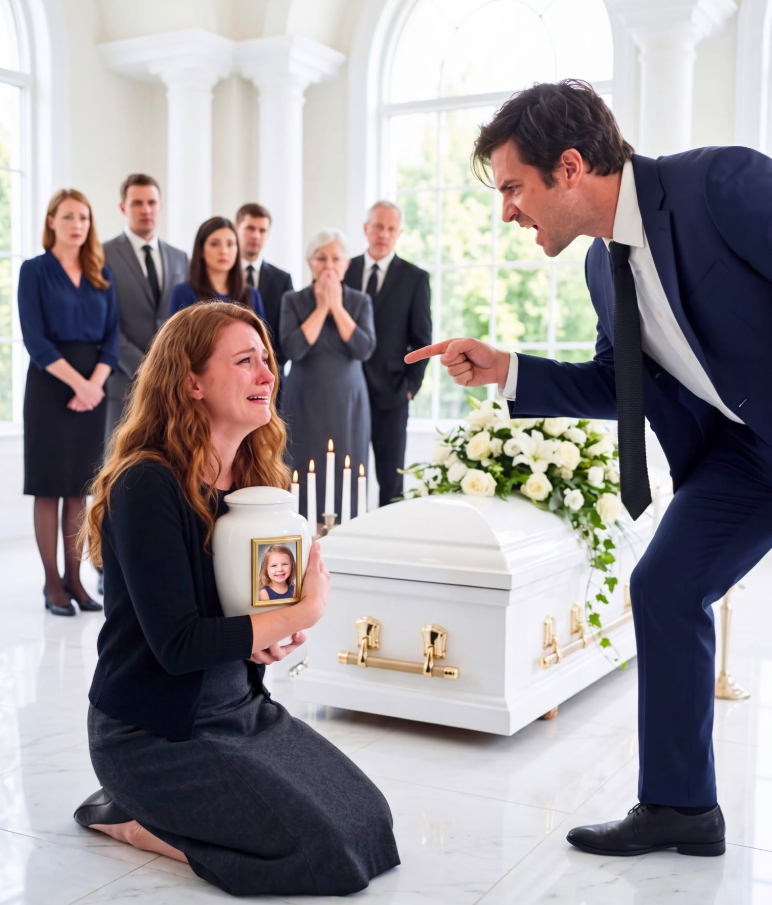
“Stop calling me, Nora,” Brendan Fairchild said. Music and laughter moved behind his voice. “The bill was handled. Bring Chloe home and let Ximena deal with whatever else you need.”
For several seconds, I could not speak.
Our daughter had d!:ed three days earlier after a lifetime of treatment for a congenital heart condition. Brendan had not come to the hospital, had not called her doctor, and apparently did not even know that the child he claimed to be supporting was gone.
“Fine,” I said.
He ended the call before I could tell him.
I drove back to the Fairchild estate in Lake Forest with the small white urn on the passenger seat. Brendan’s younger sister, Brenda, was waiting near the entrance, looking irritated rather than concerned.
“What is that?” she asked.
“Chloe.”
She frowned. “Don’t be dramatic.”
“It’s Chloe’s ashes.”
The color left her face, but she did not apologize. I walked past her and carried the urn upstairs to the nursery Brendan had insisted be placed at the far end of the house because the medical equipment was “too disruptive” near the main rooms.
I set it inside the empty crib and sat on the floor beside it.
Before I married Brendan, I had a master’s degree in actuarial science and a career I loved. I understood risk, contracts, and the difference between a promise and a system designed to fail the people who depended on it.
After Chloe was born, Brendan persuaded me to leave work and focus on her care. Slowly, he took over every account, every password, and every decision involving money until even medication and nursing support had to be approved through the Fairchild family’s expense portal.
The portal did not care whether a child was frightened or struggling to breathe. It only asked whether a request fell within a spending category.
During Chloe’s final crisis, her cardiologist prescribed an urgent medication that might stabilize her long enough for a specialist transfer. I submitted the paperwork immediately, but Brendan’s executive assistant, Ximena Ruiz, rejected it because the amount exceeded the “quarterly dependent allowance.”
I called Brendan seventeen times. He did not answer once.
A doctor arranged one emergency dose from the hospital’s limited supply. I submitted another request, attached every record, and watched the status remain Under Review for seven days.
On the seventh day, Chloe d!:ed.
That night, I overheard Brendan speaking to Brenda downstairs.
“Ximena was right to slow her down,” he said. “Nora thinks she can spend family money whenever she wants.”
The words did not make me cry. They made something inside me go quiet.
At the back of my closet was an old phone I had not turned on since my wedding day. Three years earlier, my father, Harrison Vance, had given it to me with one instruction.
“If this marriage ever leaves you trapped,” he had said, “call the number already saved.”
My father had d!:ed before Chloe was born. But the number still worked.
“Raymond?” I said when an older man answered.
There was a long silence.
“Nora,” my father’s attorney replied. “I hoped you would never need to call.”
I looked at my daughter’s urn.
“Open my father’s files,” I said. “And help me find out why the money approved for Chloe never reached her care.”
Raymond’s voice became careful.
“There is something you should know first. Your father left you more than an emergency account.”
Footsteps sounded in the hallway.
Brendan was coming upstairs, still believing I had nowhere else to go.