PART 8 — THE FINAL TRUTH WAS WAITING IN THE HOUSE WHERE MY CHILDHOOD ENDED
“My mother is d/e/@/d.”
Rachel said nothing.
I stood alone in the farmhouse kitchen.
Grace slept upstairs.
Rain tapped lightly against the windows.
“Rachel?”
“I know what your family told you.”
“What does that mean?”
“Amanda, I need you to sit down.”
“No.”
My hand tightened around the phone.
“Tell me.”
Rachel exhaled.
“Your mother’s name was Laura Bennett.”
“I know.”
“She didn’t d/i/e when you were six.”
I laughed.
A strange, frightened sound.
“You’re wrong.”
“Your father changed the story to protect you.”
“From what?”
“From her.”
My mind rejected the words.
I remembered almost nothing about my mother.
A yellow dress.
A perfume bottle.
A woman singing while washing dishes.
Then absence.
Dad said she had become seriously i/ll and d/i/ed away from home.
Claire remembered more than I did, but never spoke about it.
I called Claire.
She arrived twenty minutes later.
One look at my face and she knew.
“You know.”
“Is Mom alive?”
Claire closed her eyes.
That was the answer.
I stepped backward.
“You knew?”
“Not until Dad was sick.”
My chest tightened.
“You lied to me.”
“He made me promise.”
“Why?”
“Because Mom left us.”
“That doesn’t explain telling me she was d/e/@/d.”
Claire cried.
“She didn’t just leave.”
The truth unfolded slowly.
My mother, Laura, had developed severe gambling debts.
She forged Dad’s signature.
Borrowed against family assets.
Tried to sell part of Grandma’s land.
When Dad stopped her, she disappeared with a man involved in fraudulent property deals.
Dad eventually learned she was alive but believed contact would bring chaos back into our lives.
So when I was young, he gave me the simplest explanation he thought a child could survive.
Mom was gone forever.
Over time, that became “Mom d/i/ed.”
I felt betrayed.
But beneath the betrayal was something else.
Understanding.
Dad had made a terrible choice for protective reasons.
It was still a lie.
Love did not make the lie harmless.
“Where is she?”
Claire looked at Rachel.
Rachel answered.
“Fairhaven.”
My knees weakened.
“She’s here?”
“She came back eight months ago.”
“Why?”
Rachel hesitated.
“Because Eleanor contacted her.”
Everything connected.
Of course.
Eleanor had searched my family history.
She knew my mother was alive.
She found Laura.
“What did Eleanor want?”
“To use her against you.”
According to Rachel, Eleanor offered Laura money to challenge my ownership of the land.
Laura refused.
Not immediately.
She considered it.
That hurt.
But eventually she refused.
Then she began quietly watching Eleanor instead.
Rachel met her while investigating the Mercer network.
It was Laura who took the photograph outside the hospital.
That explained the angle.
That explained why Rachel had known so quickly what happened.
My mother had been outside.
Watching.
Again.
The idea made me furious.
“She watched me go through all of that and never came inside?”
Rachel answered carefully.
“She believed appearing suddenly would make things worse.”
“She decided that for me.”
“Yes.”
I laughed bitterly.
Everyone had spent my entire life deciding what truth I could handle.
Dad.
Claire.
Rachel.
Now Laura.
“I want to see her.”
Rachel gave me the address.
An old cottage near the edge of town.
I drove there the next morning.
Claire offered to come.
I said no.
Some doors must be opened alone.
Laura stood on the porch when I arrived.
I knew immediately.
I saw myself thirty years older.
Same eyes.
Same hands.
Same way of pressing the lips together when nervous.
She whispered my name.
“Amanda.”
I did not hug her.
“Why are you here?”
She looked down.
“Because I ran out of places to hide.”
“That sounds familiar.”
Rachel had disappeared to survive.
My mother disappeared because she could not face what she had done.
Those were not the same thing.
Laura did not make excuses.
That surprised me.
She admitted the debts.
The forged documents.
The betrayal.
She admitted she considered Eleanor’s offer.
“How much?”
“Two hundred thousand.”
“And you thought about it?”
“Yes.”
The honesty hurt more than a lie.
“Why didn’t you do it?”
Laura looked at me.
“Because she showed me a photograph of you.”
My eyes narrowed.
“You were pregnant.”
Her voice broke.
“And I realized I had spent twenty years telling myself I stayed away because you were better without me.”
She wiped her face.
“But the truth was uglier.”
“I stayed away because I was ashamed.”
I said nothing.
Laura continued.
“When Eleanor asked me to help take something from you, I finally understood that I had already taken enough.”
She refused the deal.
Then she contacted Rachel.
Together, they began tracking Eleanor’s activities.
Laura provided old documents showing Eleanor had approached my father years earlier.
That was how investigators eventually confirmed Eleanor’s fourteen-year interest in our land.
“So you helped.”
“Yes.”
“That doesn’t erase what you did.”
“I know.”
“You don’t get to come back because you finally made one good decision.”
“I know.”
I had expected begging.
Manipulation.
Tears designed to force forgiveness.
Instead, Laura said:
“I’m not asking you for anything.”
That stopped me.
“Then why meet me?”
“Because secrets ruined your life.”
She looked at the farmhouse key in my hand.
“I didn’t want to become one more secret somebody else carried for me.”
We sat on the porch for almost two hours.
I did not forgive her.
Not that day.
But I listened.
Sometimes healing does not begin with forgiveness.
Sometimes it begins with accurate information.
Before I left, Laura handed me a box.
Inside were photographs.
Me as a baby.
Claire holding me.
Dad smiling.
Laura brushing my hair.
A birthday cake.
A beach trip I barely remembered.
“You kept these?”
“All of them.”
“Why?”
“Because leaving you was the worst thing I ever did.”
I looked at her.
“Then why didn’t you come back?”
“Cowardice.”
One word.
No excuse.
I respected that more than any explanation Daniel ever offered.
I took the box home.
Months passed.
Laura did not call unless I called first.
She did not appear at my house unexpectedly.
She did not ask to meet Grace.
She respected every boundary.
Eventually, I sent her a photograph.
Grace sitting in a field of yellow flowers.
Laura replied with only:
**She’s beautiful. Thank you.**
Six months later, I invited her for coffee.
Then another time.
Then lunch.
The relationship grew slowly.
Not mother and daughter restored overnight.
Two adults determining whether trust could exist.
That felt healthier.
Meanwhile, the Mercer case finally reached resolution.
Eleanor’s financial empire was dismantled.
Properties were sold under supervision.
Restitution funds were distributed.
The Mercer Foundation ceased to exist in its old form.
One surviving property was purchased by an independent nonprofit.
They asked whether they could use it for transitional housing.
I agreed to help.
Rachel laughed when she heard.
“Eleanor spent her life collecting houses.”
“And now one helps people escape controlling homes.”
“That’s poetic.”
Thomas moved away after completing his cooperation obligations.
Rebecca never developed a relationship with him.
She said she wished him peace from a distance.
Daniel sent one final letter.
I opened this one.
It was short.
He did not ask forgiveness.
He wrote:
**I used to believe loving someone meant providing a house, money, and protection. I understand now that I never protected you from the person you needed protection from most—me.**
I read it once.
Then placed it in the archive.
Not destroyed.
Not treasured.
History.
Grace turned two on a bright spring morning.
We held her birthday on the land.
Claire brought cake.
Rachel brought balloons.
Rebecca brought a tiny yellow bicycle.
Laura arrived last and stayed near the edge until I waved her over.
Grace ran through the grass wearing a yellow dress.
The utility consortium had completed its project behind a line of trees, barely visible from the farmhouse.
My land remained mine.
My daughter’s future remained hers.
The Open Door Fund had helped more than four hundred people.
Rachel had become its financial director.
Rebecca handled governance.
Claire claimed she was “only emergency cake management,” though she volunteered every week.
At sunset, Harris arrived carrying a small package.
“You didn’t have to come.”
“I was invited.”
He handed the package to Grace.
A wooden toy truck.
I stared at it.
Harris noticed.
“Too much?”
I touched the toy.
The story had begun with a truck.
A parked truck.
A forgotten dashcam.
A camera that accidentally heard what happened behind a gate.
Without it, Daniel and Eleanor might have told everyone I fell.
That I exaggerated.
That nothing happened.
Instead, an ordinary machine became a witness.
“No,” I said.
“It’s perfect.”
Grace pushed the truck through the grass.
Everyone laughed.
Rachel stood beside me.
“Do you ever think about that night?”
“Yes.”
“Every day?”
“Not anymore.”
That was true.
For a long time, survival occupied every room in my mind.
Then gradually, ordinary life returned.
Grocery lists.
Bedtime stories.
Work meetings.
Laundry.
Birthday candles.
Rain on the roof.
Healing was not one triumphant moment.
It was the slow return of boring things.
And boring things became precious.
As darkness settled, we lit small lanterns around the farmhouse.
Grace fell asleep in Laura’s arms.
I noticed it from across the porch.
Laura looked terrified to move.
She glanced at me.
Asking permission without words.
I nodded.
She smiled through tears.
Claire leaned against my shoulder.
“Dad would have loved this.”
I looked across the land.
For years, I believed inheritance meant property.
Money.
Documents.
Family names.
But Dad’s greatest inheritance was a sentence in a letter:
**Anyone who truly loves you can survive hearing the word no.**
That sentence saved me long after he was gone.
Rachel approached holding four glasses of sparkling cider.
“To bad decisions?”
Claire laughed.
“No.”
Rebecca joined us.
“To second chances?”
Rachel considered.
“Too easy.”
I raised my glass.
“To open doors.”
They smiled.
“To open doors.”
Behind us, Grace slept safely.
Ahead of us stretched land that no longer represented greed.
It represented choice.
My mother-in-law had once believed ownership was everything.
She measured people by what could be extracted from them.
Property.
Money.
Reputation.
Children.
She never understood the one thing she could not own.
Truth.
Truth escaped locked boxes.
Truth survived forged signatures.
Truth crossed state lines.
Truth waited three years inside Rachel.
Truth waited fourteen years inside my father’s letter.
Truth waited thirty-five years inside Rebecca.
Truth even waited inside my mother, imperfect and late.
And eventually, every hidden truth arrived at the same place.
My front door.
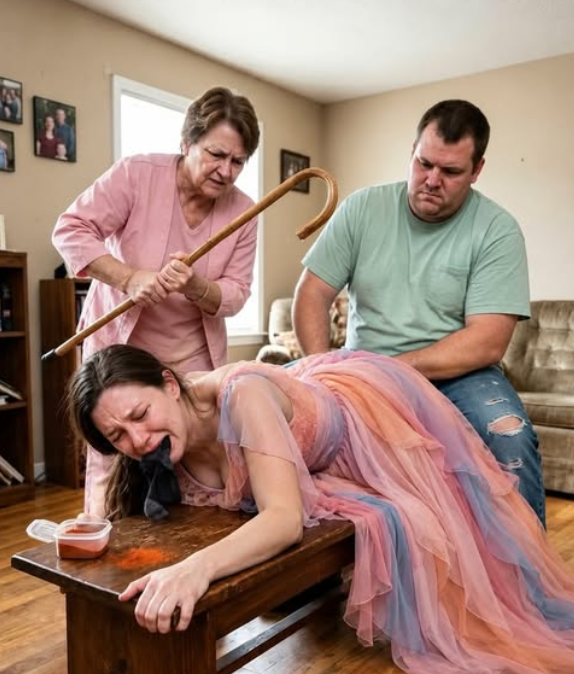
I spent years believing my story was about the night my husband held me down while his mother punished me for refusing to surrender what belonged to me.
It wasn’t.
That night was only the moment the secret became loud enough for the world to hear.
My real story was about everything that happened after.
The detective who listened.
The sister who stayed.
The missing woman who returned.
The forgotten daughter who reclaimed her name.
The mother who finally stopped hiding.
The father whose words survived him.
And the little girl who entered the world owing nothing to anyone’s expectations.
On Grace’s third birthday, she ran barefoot through the same field.
She stopped beneath an old oak tree and shouted:
“Mommy! Look!”
A tiny yellow flower had grown between two roots.
I walked toward her.
She held it carefully without pulling it from the earth.
“Pretty?”
“Very pretty.”
“Can I keep it?”
I crouched beside her.
“You can enjoy it.”
“Why not take it?”
“Because some beautiful things don’t need to belong to us.”
Grace considered that with the seriousness only a three-year-old can manage.
Then she nodded.
We left the flower where it was.
As she ran back toward the farmhouse, I remained beside the tree for another moment.
Years earlier, Eleanor had believed everything valuable had to be possessed.
Land.
Money.
People.
Even a child.
Grace had learned at three what Eleanor never learned in sixty-eight years.
Love is not ownership.
Family is not control.
And sometimes the greatest proof that something matters to you is allowing it to remain free.
I stood.
Grace turned around.
“Mommy!”
“I’m coming.”
I walked toward her.
Not crawling.
Not afraid.
Not carrying anyone else’s secret.
Just walking home.
**THE END**