
Part 2: The Voice They Never Expected
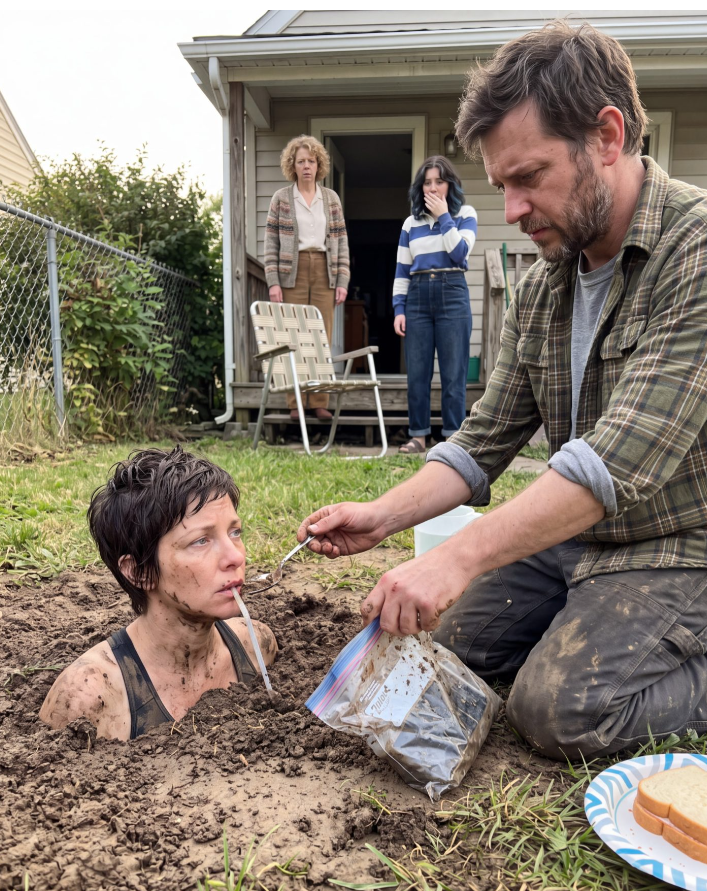
By the next morning, my lips had split around the straw, my neck burned where wet dirt rubbed against my skin, and one of my feet had been numb for hours. I had not eaten since they brought me outside, although a paper plate holding half a sandwich sat on the porch railing until the wind blew it onto the grass.
Mara watched it land only a few feet away from my face. She looked at the sandwich, then at me, and laughed as if the distance were part of the joke.
My mother-in-law told her not to encourage me. Neither of them picked it up, and I watched ants reach it before I forced myself to look away.
I told myself hunger was information, not an order. Pain was information, and fear was information too, but none of them had to decide what I would do next.
My husband came down the porch steps carrying a plastic pitcher. He stopped near enough that I could see soil dried into the seams of his work boots, and that ordinary detail frightened me more than it should have.
He had worn those boots to work. He had walked through the house in them, eaten, changed clothes, and continued his day before standing over his pregnant wife as if this were another task on his list.
“Still stubborn?” he asked.
I watched the pitcher instead of his face. His mother stood in the doorway with one hand against the frame, while Mara leaned forward in her lawn chair, interested again now that something was happening.
He poured slowly, careful not to cover the straw while his mother watched. Water hit my hair, ran over my forehead, filled my eyes, and carried loose dirt down my cheeks.
“There,” he said softly. “We’re taking care of you, even after what you did.”
That sentence was meant for anyone who might one day question him. It was also meant for my mother-in-law, who nodded as though he had proven his kindness.
I swallowed the water that reached my mouth and let the rest disappear into the soil. Then the baby moved once, faint but unmistakable, and relief struck so sharply I nearly closed my eyes.
Instead, I shifted my finger beneath the dirt and started another recording. The phone vibrated once against the plastic bag, and my husband did not notice.
He crouched beside me and changed his voice to the calm, patient tone he used around neighbors.
“All you have to say is that you understand why this happened.”
I smelled laundry detergent on his shirt beneath the mud and sweat. The ordinary scent made everything worse because it reminded me that he had washed his clothes, dressed himself, and gone on living normally while I remained trapped in the yard.
I breathed through the straw and gave him nothing he could reshape into forgiveness. His smile narrowed as he waited for me to answer.
“You think being quiet makes you strong?” he whispered. “You’re embarrassing yourself.”
The phone kept recording. He eventually stood, wiped his hand against his jeans, and returned to the porch after telling his mother I still had not apologized.
For a while, they spoke as though I were not there. They discussed groceries, television, and whether the lawn should be cut before the weekend while insects moved through the soil around my face.
That was part of the punishment too. They wanted cruelty to feel domestic, placed beside errands and weather until it seemed no more important than either one.
But every careless sentence revealed who knew exactly what was happening. My mother-in-law reminded my husband to make me repeat the lesson before releasing me, while Mara asked if they truly planned to leave me outside another night.
He said it depended on my attitude. Mara did not object; she only wondered whether the pitcher should be moved indoors before it rained.
Late that afternoon, as clouds cooled the yard and the house grew quiet, the phone beneath the dirt vibrated. It was stronger and longer than the signal for a recording.
Mara turned toward the sound.
“What was that?” she asked.
My husband slowly lowered his own phone and looked directly at the ground beside my shoulder.