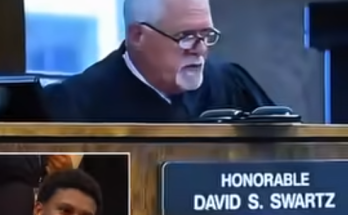


On a recent episode from the JUSTICE & COURT channel, a case involving a senior military veteran and more than $2,000 in accumulated parking fines drew significant attention after the circumstances behind the citations came to light in open court. The case centered on a question that the judge pressed the veteran to answer directly — why had the fines gone unpaid.
The veteran’s response reframed the entire proceeding. He had not ignored the tickets out of negligence or contempt for the system, but because every citation had been issued in the same hospital parking lot, during months of ongoing chemotherapy treatment.
The defendant in the case was identified as an elderly veteran with a documented military service record. Over a period of several months, he had been receiving cancer treatment at a hospital that issued parking citations in a restricted zone where he regularly parked during his appointments.
The citations accumulated because the veteran made a deliberate financial choice. Faced with the competing demands of medical costs and parking fines, he directed his limited resources toward covering the chemotherapy treatments. The unpaid balance reached $2,100 by the time the matter came before the court.

The city’s position was procedurally straightforward. The citations were described as valid, the parking zone was clearly restricted, and the total outstanding balance was presented to the judge as an enforceable obligation. The prosecution did not dispute the veteran’s medical situation but maintained that the citations had been lawfully issued.
The veteran did not contest the legal validity of the tickets. His testimony acknowledged that the fines were real and that he had been parking in a restricted zone.
His argument rested entirely on the context of why he was at the hospital and what financial choices he had been forced to make during that period.
The court was presented with documentation confirming the veteran’s military service history alongside evidence of his ongoing medical treatment. The combination of those two factors — a service record and an active cancer diagnosis — became central to how the judge evaluated the case beyond its procedural dimensions.

The judge reviewed the service record and the medical circumstances before responding. Rather than treating the case as a routine enforcement matter, the court considered the broader context of the veteran’s situation, specifically the nature of the financial trade-off he had been forced to make while undergoing chemotherapy.
The judge ruled that all parking tickets in the case were dismissed in full. The court’s reasoning reflected the position that penalizing a veteran for parking at a hospital while undergoing cancer treatment fell outside the intended purpose of parking enforcement. The $2,100 balance was wiped entirely from the record.
In delivering the ruling, the judge offered a broader observation about the function of judicial discretion in cases where strict rule application would produce outcomes that conflict with the underlying intent of the law. The remarks framed the dismissal as a matter of appropriate prioritization rather than a deviation from legal standards.

The ruling left the veteran with no outstanding financial obligation related to the citations. For a person managing the physical and financial weight of cancer treatment on what appeared to be a fixed income, the dismissal represented a meaningful reduction in financial pressure during an already difficult period.
Cases of this nature occasionally arise in municipal courts when defendants face circumstances that, while not constituting a legal defense to an infraction, provide compelling grounds for judicial discretion in sentencing or enforcement. Judges in many jurisdictions retain the authority to dismiss fines when hardship factors are sufficiently documented and presented.
The case serves as a reminder that municipal fine enforcement, while administratively consistent, can intersect with individual circumstances that complicate automatic application of penalties. Veterans’ advocacy groups have long highlighted financial hardship related to medical care as a recurring issue among older service members navigating both healthcare systems and municipal obligations simultaneously.
The full ruling and the veteran’s testimony are available in the video below.